
Insomnia Treatment in Erie, PA
Covered by insurance. Delivered virtually. Led by sleep specialists.
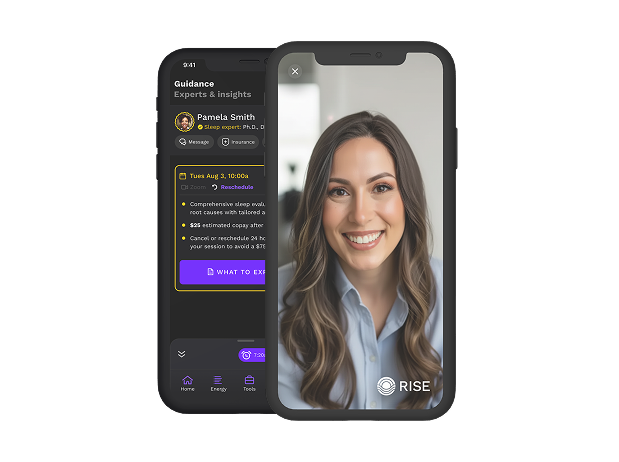
Work one-on-one with Pennsylvania-licensed sleep psychologists through the RISE Sleep Clinic. Most major insurance plans accepted.


+ MORE INSURANCE PROVIDERS
The RISE Sleep Clinic provides evidence-based insomnia treatment using Cognitive Behavioral Therapy for Insomnia (CBT-I). Treatment is delivered through secure telehealth, so you can get expert care from home — with an approach designed for long-term sleep improvement.
Covered by most major insurance plans, including Aetna, Anthem, Blue Cross Blue Shield, Medicare, and UnitedHealthcare, plus more providers. Coverage is expanding.

What is the RISE Sleep Clinic?
The RISE Sleep Clinic is a virtual clinic specializing in the treatment of chronic insomnia.
We use CBT-I, the first-line treatment recommended by sleep medicine experts, to help adults who struggle with falling asleep, staying asleep, or waking up too early — even after trying sleep tips, routines, or medication.
We treat patients across Pennsylvania, including Erie, through online appointments that are often covered by insurance.
At a glance:
- One-on-one care with licensed sleep psychologists
- Virtual sessions — no commute required
- Evidence-based, non-medication treatment
- Covered by most major insurance providers, including Aetna, Anthem, Blue Cross Blue Shield, Medicare, and UnitedHealthcare
“For the first time, I had a safe place to talk about why I wasn't sleeping and someone who could show me exactly how to fix it. By improving my sleep, positive changes in the rest of my life just started stacking up.”
Who this treatment is for
You may be a good fit for the RISE Sleep Clinic if you:
- Take a long time to fall asleep
- Wake up during the night and can’t get back to sleep
- Wake earlier than you want
- Feel anxious or frustrated about sleep
- Have struggled with insomnia for months or years
CBT-I is designed to treat the root causes of insomnia — not just the symptoms.
“I wish more people knew about this. I can finally sleep better without a cocktail of medications every night.”
How insomnia treatment works
A structured, proven approach to better sleep
Get matched with a licensed sleep psychologist
You’ll work one-on-one with a clinician licensed in Pennsylvania and trained specifically in insomnia treatment.
Meet weekly via secure video sessions
Sessions are virtual and designed to fit into real life.
Follow a personalized treatment plan
Your psychologist helps you adjust sleep habits, timing, and thought patterns based on your specific sleep challenges.
Build skills that last
CBT-I focuses on long-term improvement — not short-term fixes.
Many patients begin noticing meaningful improvements within the first few weeks of treatment.
Takes just a few minutes. No obligation.
Why virtual CBT-I works
Virtual CBT-I delivers the same evidence-based insomnia treatment as in-person care — with fewer barriers.
- Comparable outcomes to in-person treatment
- No commuting or waiting rooms
- Easier scheduling that fits real life
- Access to licensed sleep psychologists who specialize in insomnia
- Practice sleep strategies in your own bedroom environment
- Secure, HIPAA-compliant video sessions
You get expert insomnia treatment without disrupting your life.
How the RISE app supports your care
Some patients choose to use the RISE app alongside therapy to better understand their sleep patterns and stay engaged between sessions. The app is included as part of your treatment at the RISE Sleep Clinic, at no additional cost.
The app can help you:
- Track sleep consistency and timing
- Understand circadian rhythm patterns
- Reinforce strategies from therapy
- See progress over time
Your psychologist will help you decide how — or whether — the app fits into your treatment. Therapy always comes first.
“I feel like I finally understand the way sleep works and more importantly, how to make it work for me.”
What to expect from treatment
- Weekly virtual CBT-I sessions with a licensed sleep psychologist
- A structured, time-limited course of care (not open-ended therapy)
- Clear guidance and adjustments between sessions based on your sleep patterns
- Support when setbacks happen — including stress, travel, or schedule changes
- Practical tools and skills you can continue using long after treatment ends
No guesswork. No trial-and-error sleep hacks.
Meet Your Erie Sleep Psychologists
All of our clinicians are licensed in Pennsylvania, board-certified in behavioral sleep medicine or licensed psychologists with specialized training in CBT-I.

Dr. Karin Voelker
Psy.D.
Licensed Clinical Psychologist specializing in behavioral sleep medicine, insomnia treatment, and circadian rhythm disorders. Dr. Voelker completed her postdoctoral fellowship at Stanford University Sleep Medicine Center and uses a client-centered, strength-based approach integrating evidence-based techniques.

Dr. Jane Dyonzak
Ph.D., FAASM
Licensed Clinical Psychologist and Fellow of the American Academy of Sleep Medicine with 20+ years specializing in sleep and behavioral medicine. Dr. Dyonzak has served as a consultant to sleep disorders centers and principal investigator for clinical trials on sleep medications and devices.

Dr. Lauren Neaman
Psy.D., A-CBT
Licensed Clinical Psychologist and Diplomate of the Academy of Cognitive and Behavioral Therapies. Dr. Neaman completed advanced training through the University of Pennsylvania's Behavioral Sleep Medicine program and specializes in insomnia, anxiety disorders, and circadian rhythm issues.

Dr. Benjamin Pfeifer
Ph.D.
Founding clinician at RISE Sleep Clinic specializing in treating adults with insomnia and sleep disorders. Dr. Pfeifer completed his Ph.D. at The Ohio State University and holds PSYPACT authorization for telehealth practice. His background includes work with veterans at VA Ann Arbor Healthcare System.

Dr. Daniella Marchetti
Ph.D., DBSM
Licensed Clinical Health Psychologist and Diplomate in Behavioral Sleep Medicine. Dr. Marchetti specializes in insomnia treatment, CPAP adherence, nightmare therapy, and circadian rhythm disorders. She earned her doctorate from the University of Miami and completed her fellowship at the Miami VA Medical Center.
Frequently Asked Questions
Is treatment at the RISE Sleep Clinic covered by insurance?
Is treatment at the RISE Sleep Clinic in person or online?
Do I need to live in Erie to receive care from the RISE Sleep Clinic?
How quickly can I start treatment at the RISE Sleep Clinic?
Is virtual insomnia treatment as effective as in-person care?
Who provides care at the RISE Sleep Clinic?
Do I need a referral to start treatment at the RISE Sleep Clinic?
Is the RISE Sleep Clinic the same as the RISE app?
What makes Erie challenging for sleep?
Erie averages 104 inches of snow a year. Lake Erie's warming waters are making the lake-effect storms worse, not better. That much winter, combined with a Rust Belt economy in transition, creates sleep conditions that most of the country doesn't have to think about.
- 104 inches of annual snow: Lake-effect snow is Erie's defining weather feature. The record is 166 inches in a single season, and November 2024 broke the single-day record at 22.6 inches. Months of gray skies, limited daylight, and being snowed in affect melatonin production and make seasonal insomnia common.
- Healthcare and insurance jobs: Erie Insurance Group is headquartered here. Healthcare and social assistance is the largest employment sector at 8,579 jobs, followed by manufacturing at nearly 6,000. Between hospital shifts and insurance company operations, a lot of Erie workers keep irregular hours.
- A shrinking city's pressures: Erie's population has declined to about 93,000, down from its peak decades ago. The economic uncertainty of a shrinking Rust Belt city adds a layer of stress that compounds sleep problems. When the community around you feels like it's contracting, anxiety doesn't stay at the office.
Pennsylvania's low uninsured rate (7.1%) means most Erie residents can access care. UPMC Hamot and Saint Vincent Hospital handle in-person sleep medicine. For chronic insomnia, telehealth CBT-I is practical during Erie winters when driving anywhere feels like an ordeal. Population studies at similar northern latitudes in Europe consistently find worse sleep quality and more nighttime awakenings during winter months. CBT-I addresses the behavioral patterns that form during those long gray stretches.
Ready to get help for insomnia?
If you've tried sleep tips, routines, supplements, or medication — and you're still not sleeping — CBT-I can help. Start evidence-based insomnia treatment with a licensed sleep psychologist. Most major insurance accepted.
Check Insurance & Get Started