

A sleep debt calculator estimates how much sleep you owe by comparing recent nights to your individual sleep need. Enter the last 14 nights below, or a weekday and weekend average. You'll get a running total and what that number usually means.
Sleep debt calculator
Sleep debt is how much sleep you owe your body against your own need — not against a generic eight hours. Enter the last 14 nights, or a weekday and weekend average.
Estimated sleep debt
8.1 hours
RISE tracks this against your actual sleep need, not a guess. Try RISE free
This calculator subtracts the sleep you logged from your sleep need, then totals the gap over the last 14 nights.
Last night impacts sleep debt more. Two nights ago still matters. Even 10 nights ago matters, a little less than last night.
There are two ways in. You can type hours slept for each of the last 14 nights, from 1 night ago (last night) back to 14 nights ago. Or you can enter a weekday average and a weekend average. In both cases you also enter a sleep need.
If you slept more than you needed, that extra sleep pays some of the total down. If you are net ahead, the result is zero. This window does not try to model leftover credit from last month.
That is the same 14-night method we use in the sleep debt explainer, and the same window RISE uses in the app.
Van Dongen showed why the gap accumulates as extra wakefulness with a real cost. Kitamura showed why the need you subtract against has to be yours. The calculator is the arithmetic. It is not a lab test.
A worked example: you need 8 hours 15 minutes, and you slept 7 hours a night for two weeks. The estimate is about 8 hours of sleep debt. Last night pulls that number more than the night two weeks ago. A couple of 9-hour weekend nights would chip away at it. They would not wipe the two weeks.
Your result is an estimate of how many hours you owe, grouped into three bands we use in the app.
| Estimated sleep debt | What it usually means | What to do next |
|---|---|---|
| Under 5 hours | This is the range RISE aims for. Mental performance with about five hours of deficit may sit close to zero. | Keep the sleep-wake pattern that got you here. |
| 5 to 10 hours | Enough to feel — sleepier days, slower focus, a shorter fuse. You may not notice how far attention has slipped. | Add 20 to 30 minutes of sleep for several nights. A well-timed nap can help. |
| Over 10 hours | A lot to carry. One long lie-in will not clear it, and weekend catch-up is only a partial reset. | Sleep longer than your need for several nights. Talk to a doctor if you still cannot get close. |
These bands are a product guide, not a diagnosis. Sleep debt is not a formal disorder. How a given number feels still depends on your need, your circadian rhythm, and how the hours were lost.
A 14-day restriction study found people were largely unaware of their growing attention lapses. So if the calculator says eight hours and you feel “used to it,” trust the nights more than the vibe.
And the number does not tell you how the hours were lost. Seven nights of six hours is not the same week as six good nights and one all-nighter, even if the totals match. Chronic short sleep over months is a different problem again. This tool estimates the short window. It does not score stages, and it does not replace a sleep score you already ignore. Duration against need is the input that matters.
A sleep debt calculator is only as good as the sleep need you give it, because debt is the gap against your number, not against eight hours.
Looking at data from 1.95 million RISE users aged 24 and up, sleep needs range from five hours to 11 hours 30 minutes. The median sleep need was eight hours, but almost half of our users need eight hours of sleep or more a night. Forty-eight percent need eight hours or more. If you need nine hours 20 minutes and you enter eight, the tool will undercount your debt every night.
One study put mean optimal sleep duration at eight hours 25 minutes, with a range from about seven hours 17 minutes to nine hours 16 minutes. Population guidelines sit at seven or more hours for adults. Those are floors and ranges. They are not your need.
If you do not know yours, start with 8.25 (8 hours 15 minutes) and treat the result as a draft. Then read how much sleep you need. RISE estimates need from a year of phone-use patterns and sleep-science models, down to the minute, so the app does not have to guess.
You lower sleep debt by sleeping longer than your need for several nights, not by one long weekend lie-in.
A 2016 recovery study found one hour of potential sleep debt takes about four days of extended sleep to recover. Weekend catch-up can help some outcomes. It does not fully protect metabolism on the next short week. So the move is a little more sleep, repeated.
Three practical ways:
Protect the next week while you pay it down. A common pattern is a careful Sunday night, then the same late Thursday. The calculator will look better on Monday morning than it will by Friday. Keep wake time steady enough that your body clock does not slide, and put the extra sleep on the front of the night when you can.
The full case for catch-up lives in can you catch up on sleep. The definition, the 14-day method, and what debt does to you live in what sleep debt is. If you want a longer walkthrough of measuring the gap, see how much sleep debt you have.
A calculator like this is a fair estimate if your times and need are close, and a rough one if you guessed both.
People mis-estimate how much they sleep. Time in bed is not time asleep. A wearable sleep score will not fix that, because scores collapse the wrong variables. What you want is duration against need, plus sleep-wake times that stay aligned with your clock.
Use this page to get a first number. Then let RISE track the same math against a measured need, every morning, so you can see the total rise or fall as you change the nights.
A fair way to log without an app: write down bedtime and wake time for two weeks, subtract about 20 minutes if you usually take a while to fall asleep, and run those hours here. Do not reconstruct two weeks from memory on Sunday night. And do not mix time in bed with time asleep. If you were awake from 2 a.m. to 3 a.m., that hour is not sleep, even if the lights were off.
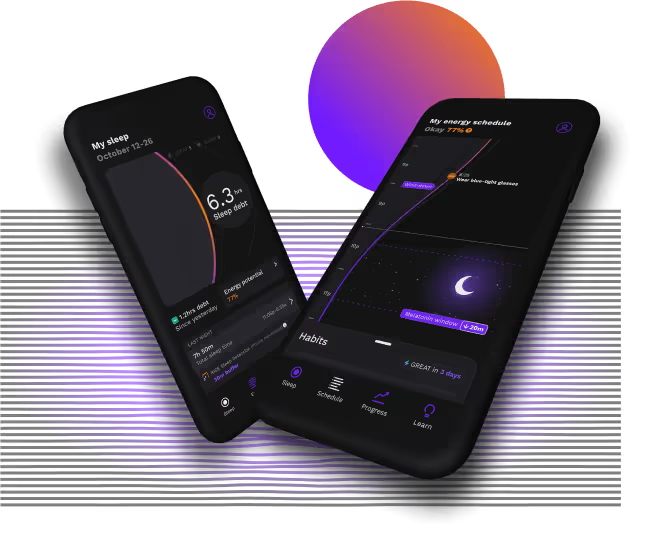
RISE makes it easy to improve your sleep and daily energy to reach your potential



You calculate sleep debt by subtracting the sleep you've gotten from the sleep you need, then totaling that gap over the last 14 nights. Last night impacts the number more. Two nights ago still matters. Even 10 nights ago matters, a little less than last night. The calculator on this page does that math. RISE tracks the same window against a measured need.
Pick your sleep need, then log how long you slept for the last two weeks. The leftover hours are your estimated debt. If you do not know your need, start with 8.25 (8 hours 15 minutes) and treat the result as a draft. The calculator on this page does the arithmetic. The RISE app measures need from your phone use instead of a guess.
How much sleep debt you have depends on your personal sleep need and the sleep you've gotten recently. Two people who both slept seven hours can carry very different debt. Use the calculator above with the last 14 nights, or a weekday and weekend average. For a number that updates each morning against a measured need, the RISE app tracks the same 14-night window. We've also written a longer walkthrough.
Yes. The calculator on this page estimates sleep debt from the last 14 nights, or from a weekday average and a weekend average. Last night counts more than older nights. You enter your sleep need and your recent sleep. It returns hours owed and what that band usually means. It is an estimate. RISE is the version that tracks your actual need automatically.
There is no official cutoff for high sleep debt. At RISE, we treat under five hours as the range to aim for. Five to ten hours is enough to feel — sleepier days, slower focus, a shorter fuse. More than ten hours is a lot to carry. You can still pay it down, but it takes several nights of sleeping longer than your need, not one long lie-in.
There is no set cap on how much sleep debt you can accumulate. Acute debt is the short-term gap over the last two weeks or so. Chronic debt is months or years of regular short sleep, and it is harder to measure as a single number. This calculator estimates the short-term window. The more nights you fall short of your need, the higher the total climbs.