

A smart alarm tries to wake you in a lighter stage inside a set window. Consumer devices inherit the stage-accuracy problem, so that promise is shaky. Sleep inertia still lasts 15 to 60 minutes or more. Circadian phase and sleep debt usually matter more than the stage at the beep.
A smart alarm is any wake tool that uses a window of time, not a single minute, and then adds a rule — stage, light, sound, or debt — for when to go off.
The ad version says: give us a 30-minute window and we will catch you in light sleep. The quieter version says: we will fade sound or light so the landing is less rude. A third version, which is the one RISE actually ships, uses the window to show you whether that wake time adds sleep debt and whether it sits on your body clock.
Those are different products sharing a name. Only the last one is aimed at the two levers that change how mornings feel.
They try to, and the sensor usually cannot tell light sleep from the next stage well enough to keep that promise.
Consumer “wake you in light sleep” alarms inherit the stage-accuracy problem. Wrist and phone models infer stages from motion and pulse. Against polysomnography, stage sensitivity often sits between 50% and 86%, and agreement is only fair. A 2024 five-device study also found large errors on night wakings. If the device cannot reliably label the stage, it cannot reliably time the beep to that stage.
There is no PSG-validated consumer smart-alarm trial that shows a reliable stage-timed benefit in the home. A small 2024 bedroom study of a multimodal “smart” alarm found that how long the light and sound ran may matter more than the gadget. However, more research needs to be done in this area.
Not in the way they advertise. A gentler landing can feel better, but a stage-timed landing is not a proven upgrade.
One lab study found that dawn light in the last 30 minutes of sleep raised alertness and improved cognitive performance versus a control. That is a gradual-wake signal, not a hypnogram. It is the closest primary we have for “ease me up” rather than “catch a stage.”
A sudden alarm on a short night will still feel awful. The morning is doing two jobs at once: ending sleep, and clearing sleep inertia. No beep, however clever, erases a week of debt.
Sleep inertia is the groggy, slow, slightly stupid stretch after you wake. A smart alarm does not cancel it.
The feeling is ordinary. Reviews put the worst of it in the first 15 to 60 minutes, sometimes longer. It can last even after a full night, and it is worse when you wake from deep sleep, after prior sleep loss, or during the circadian night. A clinical review distinguishes that everyday fog from sleep drunkenness, which is a heavier, less common state.
Here is the part the ads skip. An endogenous circadian rhythm in inertia produces the greatest cognitive hit when you wake during the biological night — and that effect is independent of sleep stage. Waking “in light sleep” at 4:30 a.m. can still feel terrible. The clock you woke on matters more than the color the app assigned to the last epoch.
After you are up, the countermeasures that have any signal are ordinary: caffeine, light, and a short burst of movement. We have written the practical list in how to wake up to an alarm and in why you cannot wake up.
“Using a sleep app on your phone to track your sleep can be a great way to keep tabs on whether you’re getting enough sleep or not, which can be difficult to assess yourself,” says Dr. Chester Wu, a double board-certified doctor in psychiatry and sleep medicine. The same logic applies to the alarm. The useful job is protecting duration and timing, not guessing a stage the phone cannot see.
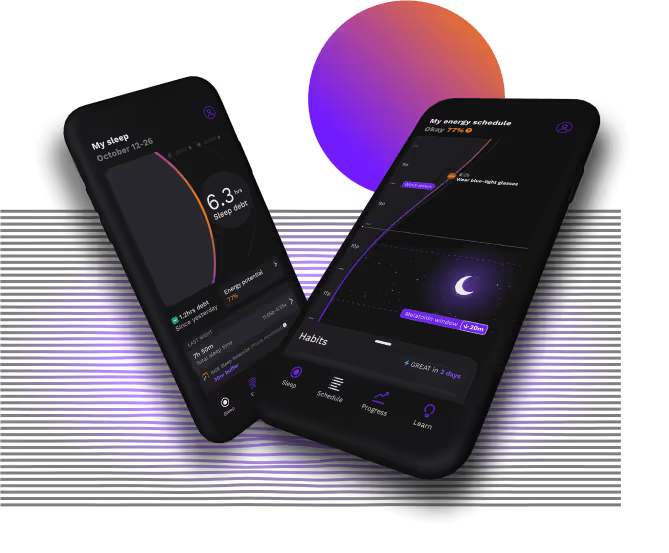
RISE makes it easy to improve your sleep and daily energy to reach your potential



Maybe — the two best recent papers do not agree, so the evidence is mixed.
A 2022 study found that snooze prolonged N1 and wake in the last 20 minutes and worsened vigor compared with a single alarm. That is the anti-snooze citation already used on this site. A 2024 study in habitual snoozers went the other way: 30 minutes of snooze did not clearly worsen cognition and avoided some N3 awakenings.
Both can be true in different people. If you already snooze, budget the 20–30 minutes instead of pretending they are bonus sleep. If you do not snooze, there is no strong reason to start. Neither paper is a license to set a 5:30 alarm you intend to ignore until 6:00.
Set a wake window that respects your circadian phase and your sleep debt. Ignore the light-sleep claim.
Looking at data from 1.95 million RISE users aged 24 and up, sleep needs range from five hours to 11 hours 30 minutes. A 6:00 a.m. alarm that is fine for a six-hour sleeper is a debt machine for someone who needs nine. The useful question at bedtime is not “which stage will I be in?” It is “will this wake time leave me short of my need, and is it on my body clock?”
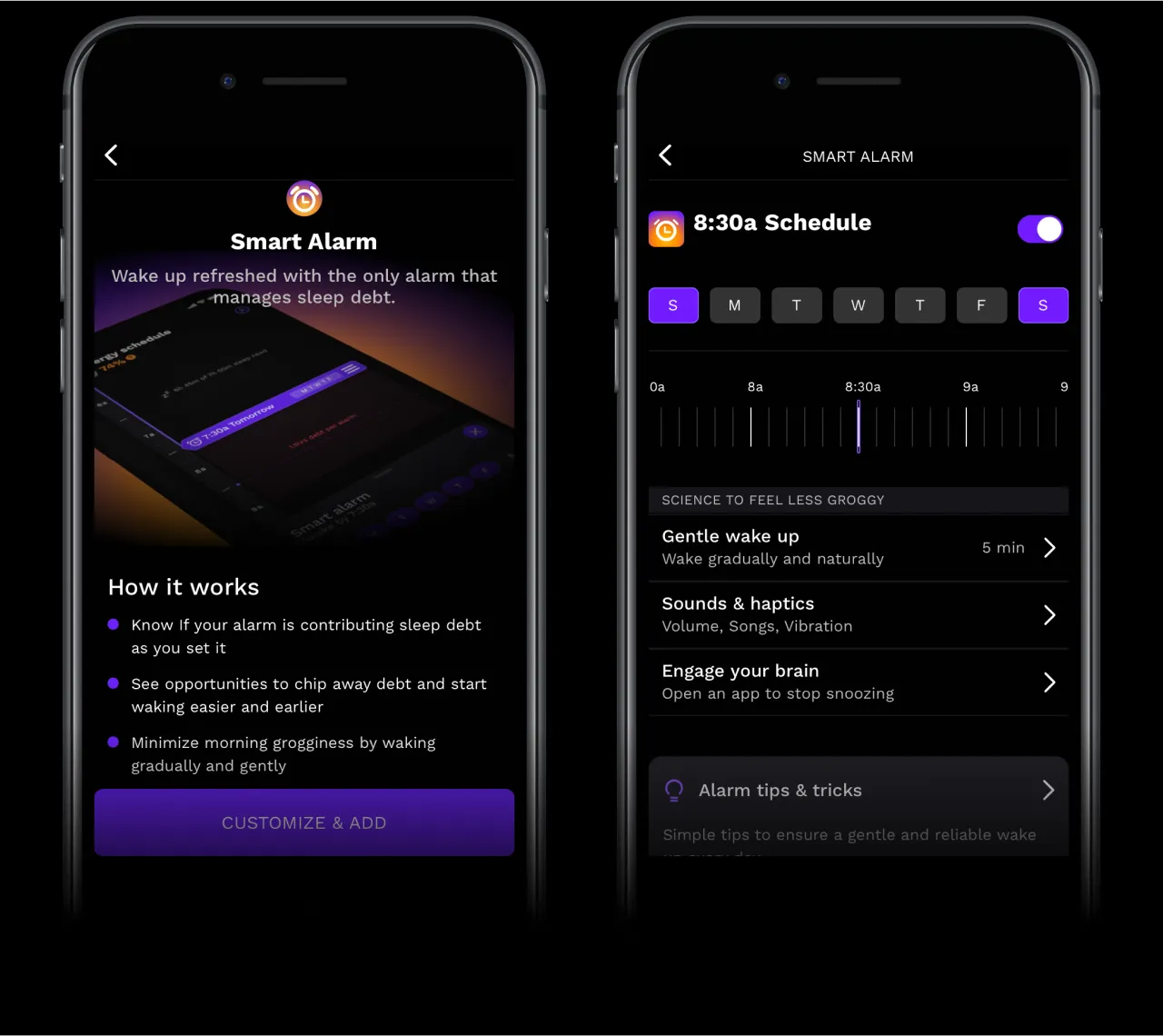
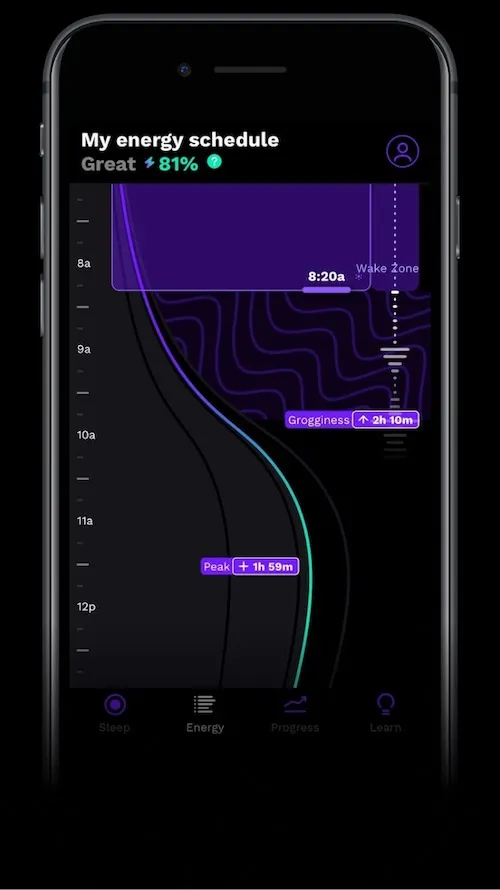
RISE’s alarm is built around that question. When you set a wake time, the app tells you whether that time will add to your 14-night debt. Come morning, it can fade in a gentle sound or a Watch tap. It is not claiming to read your hypnogram. The energy schedule also shows a wake zone — the stretch when grogginess is expected to lift — so you can plan the first hour instead of fighting it.
If you cannot wake up, start with debt and schedule, not a new gadget. Keep a regular wake time. Get outdoor light soon after you are up. Put the phone across the room if you keep sleeping through it. And if mornings stay impossible after enough sleep, talk to your doctor — that can be apnea, a circadian disorder, or something else a smart alarm will not fix.
Sleep trackers work for the timing this window needs. They do not work as the stage oracle the ads sold you. Use the reliable timing data. Leave the hypnogram alone.
A smart alarm is a wake tool that looks at a window of time, not a single minute. Some apps claim to catch you in light sleep. Others fade in sound or light. Some, including RISE, use the window to protect sleep debt and circadian timing rather than to guess your stage.
They work as a gentler, windowed way to get up. The “wake you in light sleep” version is shaky, because consumer devices do not reliably identify stages. Sleep inertia still lasts 15 to 60 minutes or more. Circadian phase and prior sleep debt usually dominate the stage at the beep.
They try to. A wrist or phone model is guessing from motion and pulse, and stage accuracy against lab studies is only fair. There is no home trial showing a reliable, PSG-validated benefit from consumer stage-timed alarms. Treat the light-sleep claim as marketing layered on a noisy sensor.
A gradual sound or dawn light can feel better than a sudden beep, and one lab study found last-30-minute dawn light raised alertness. That is not the same as stage-timing. A window that avoids cutting a night short may help more than a hypnogram. A harsh alarm on a 5-hour night will still feel awful.
The evidence is mixed. One 2022 study found snooze prolonged light sleep and wake in the last 20 minutes and lowered vigor. A 2024 study in habitual snoozers found a 30-minute snooze did not clearly worsen cognition and avoided some deep-sleep awakenings. If you snooze, budget the time. Do not treat it as free sleep.
Sleeping through an alarm is usually sleep debt, circadian misalignment, or both. Keep debt low, wake at a regular time, put the phone out of reach, and use a sound you cannot habit-tune. See how to wake up to an alarm and why you cannot wake up for the full list.