

Sleep quality vs sleep quantity is a false choice — you need both. Quantity is how much you sleep versus your personal need. Quality is a bundle: timing, efficiency, continuity, how rested you feel. The useful number is sleep debt, which captures missed quantity over nights.
| Construct | What it is | Versus quantity / debt | Evidence note |
|---|---|---|---|
| Sleep quantity | Hours you actually sleep, minus time awake in bed. | Only useful against your personal need — not a generic eight hours. | Among 1.95 million RISE users aged 24 and up, needs ranged from five hours to 11 hours 30 minutes. |
| Next-day restfulness | How restored and satisfied you feel after sleep. | You can log “enough” hours and still feel wrecked if debt or timing is off. | Research suggests how you feel about sleep can matter more than a tracker score. |
| Sleep onset latency | How long you take to fall asleep. About 10–30 minutes is typical. | A fast onset does not cancel unpaid hours from earlier in the week. | One of the few quality slices with a generally agreed scoring method. |
| Sleep efficiency / continuity | Time asleep versus time in bed; how unbroken the night is. About 85%+ is a common healthy-efficiency mark. | High efficiency on too few hours still leaves sleep debt. | Time awake at night tends to line up with how well you think you slept. |
| Timing and regularity | When you sleep, and how consistent that schedule is. | The same quantity at the wrong clock time is still misaligned. | Circadian alignment is the cleaner operational version of this slice. |
| Stage mix (deep / REM) | Minutes in each stage on a given night. | Getting your need on a regular schedule usually covers stages without chasing them. | Wearables are imperfect at staging, and there is no one healthy mix for everyone. |
| Tracker sleep score | A proprietary blend of the slices above, often out of 100. | Not the same as quantity, and not the same as sleep debt. | There is no agreed definition of sleep quality. Scores rarely predict how you feel. |
It’s understandable to be confused when it comes to the topics of sleep quality and sleep quantity! We often hear them contrasted with each other, alongside conflicting opinions about which one is more important.
In reality, experts agree you need both good quality sleep and enough quantity sleep for maximum energy, health, and productivity. You can’t skimp out on one by relying on the other.
Below, we’ll dive into why both your sleep quality and sleep quantity are important, what each term actually means, and how you can use the RISE app to improve them both to feel and perform better each day — which is what really matters.
Sleep quality and sleep quantity are equally important. You need enough sleep for you and you need this sleep to be good quality for maximum energy, health, and performance. You can’t hack sleep by relying on one over the other.
Here’s why:
Most simply, sleep quality refers to how well you sleep, and sleep quantity refers to how long you sleep. You need to sleep well and long enough to get the benefits of sleep. But understanding what qualities and quantities of sleep you need to be at your best — which is probably why you want to know which to focus on — is more complex.
That’s because healthy sleep is both “multidimensional” and highly individual.
Sleep quality is an expansive concept that encompasses several dimensions or aspects of sleep, such as:
And good sleep quality and enough sleep quantity look different for everyone. We all need a different amount of sleep and sleep quality covers many factors that are unique to you — like the right sleep timing and feeling satisfied with your sleep.
When we say both matter, it’s because you need to optimize all the aspects of healthy sleep included in the concept of sleep quality and ensure you get enough sleep quantity for your individual needs to reap the full benefits of sleep.
Thinking Holistically About Sleep
Rather than considering sleep purely in terms of quality and quantity, it is more helpful to think of your sleep as a whole. What matters most is getting enough healthy sleep for you, at the right time for you, on a regular schedule.
To achieve this, focus on:
When you have low sleep debt, you are getting enough sleep for you. When you are in sync with your circadian rhythm, you are getting this sleep on a regular schedule at the right time for you. This combination means your sleep quality and quantity will be optimal for you.
Focusing on these metrics — sleep debt and circadian alignment — which can be more easily defined, measured, and improved than the broader concept of sleep quality and better understood and measured than the more general concept of sleep quantity, will help boost your energy, mood, productivity, and physical and mental health.
How RISE Can Help
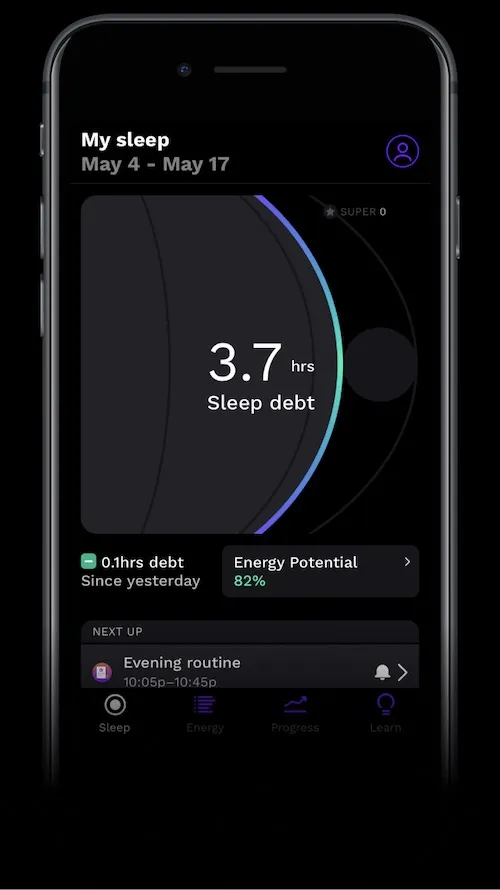
The RISE app calculates and helps you lower your sleep debt and predicts the timing of your circadian rhythm each day, helping you get better sleep and have more energy.
Worrying about sleep quality vs. quantity can backfire, says Dr. Chester Wu, a double board-certified doctor in psychiatry and sleep medicine, as excessive concern about sleep can lead to anxiety and issues like insomnia.
Sleep quality scores given by sleep trackers might do more harm than good, especially if you’re not getting any information on what’s causing a low sleep quality score or how you can improve it.
This can lead to orthosomnia, which is when you get obsessed with perfecting your sleep data.
On the flip side, you might think your sleep quality is fine and then a wearable tells you it isn’t. This might lead to you feeling more sleepy, performing worse (as some research shows), or needlessly worrying about your sleep — causing your sleep quality and quantity to take a hit.
As both are just as important as each other, you shouldn’t worry about sleep quality vs. sleep quantity. Instead, focus on keeping your sleep debt low and syncing up with your circadian rhythm (which will help you get enough sleep and make this sleep the best quality you can). More on how soon.
Sleep quantity is how much sleep you get. For example, your sleep quantity last night might have been eight hours.
Sleep quantity seems like a straightforward number, but that’s not always the case.
Sleep quantity is how much sleep you really get, subtracting all the time you’re awake in bed. And for sleep quantity to be a useful metric, you need to know your sleep need — the amount of sleep you personally need.
Eight hours is the often recommended amount of sleep, but it’s just that: a recommendation. Sleep guidelines are well-intended but misleading, reflecting the amount of sleep we get, not the amount of sleep we need. In reality, we all need a different amount of sleep.
For example, when we looked at the sleep needs of 1.95 million RISE users aged 24 and older, we found it ranged from five hours to 11 hours 30 minutes.
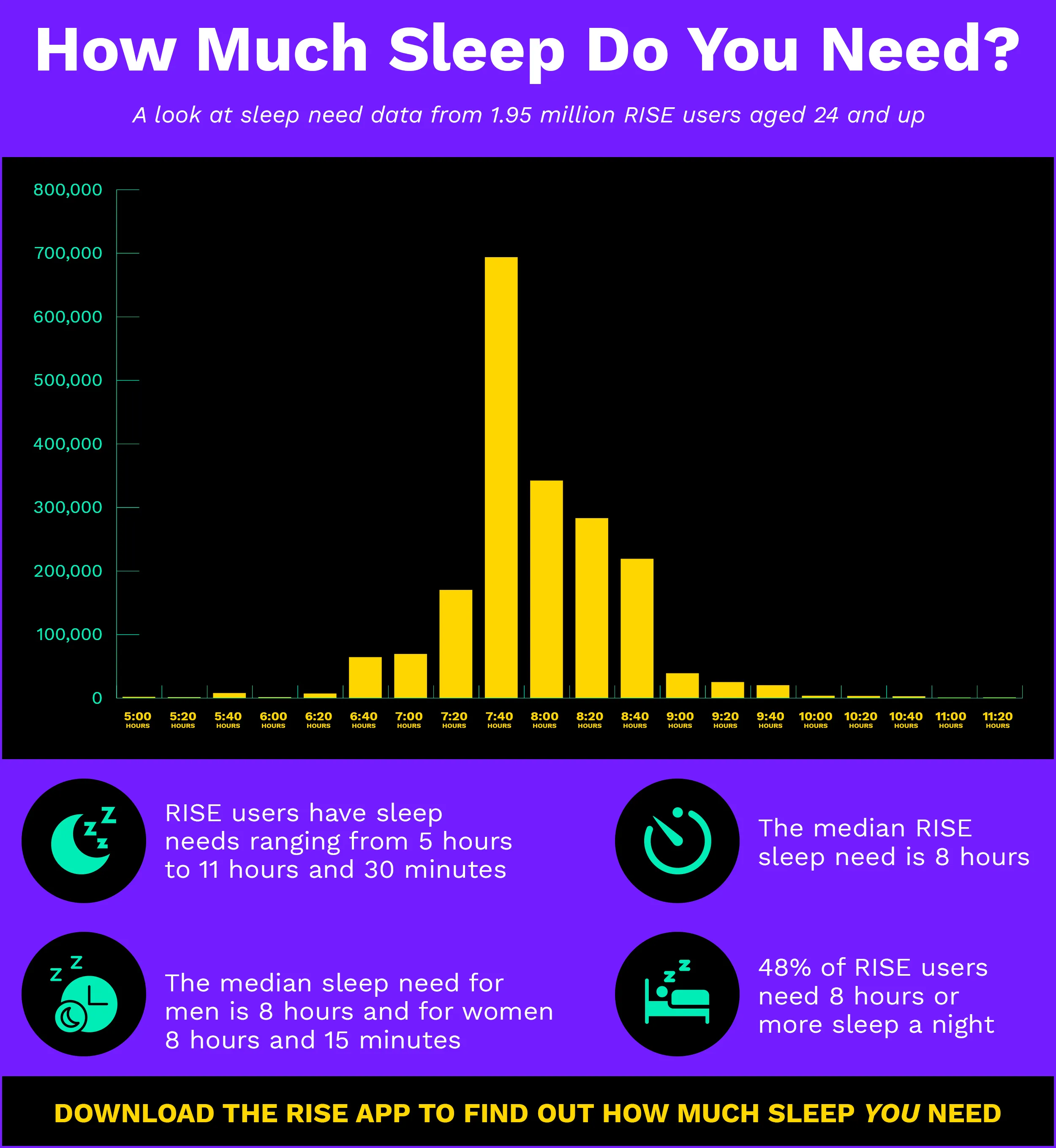
Here’s how sleep quantity can be measured:
When working out your sleep quantity, you’ll get a number in hours and minutes showing how long you slept.
Heads-up: Measuring sleep quantity is most useful on a night-to-night basis. Averaging sleep duration over longer periods can obscure valuable insights by conflating the measurement with the sleep dimension of regularity (how consistent your sleep schedule is). This is why sleep debt — which RISE measures over 14 nights — is a more valuable metric for assessing sleep quantity (and quality!) over the long term, as it accounts for variations in nightly sleep and their cumulative effects on your health and well-being.
It’s also worth noting that measuring your sleep quantity can be more useful for sleepers with good sleep efficiency. However, for those with high wake after sleep onset (WASO) or fragmented sleep, simply adding up time asleep may obscure issues with sleep efficiency, making the measurement "accurate" but less helpful in assessing how well you actually slept. Another reason why focusing on sleep debt and circadian alignment makes more sense!
Want to track your sleep quantity? We’ve covered the best sleep debt trackers here.
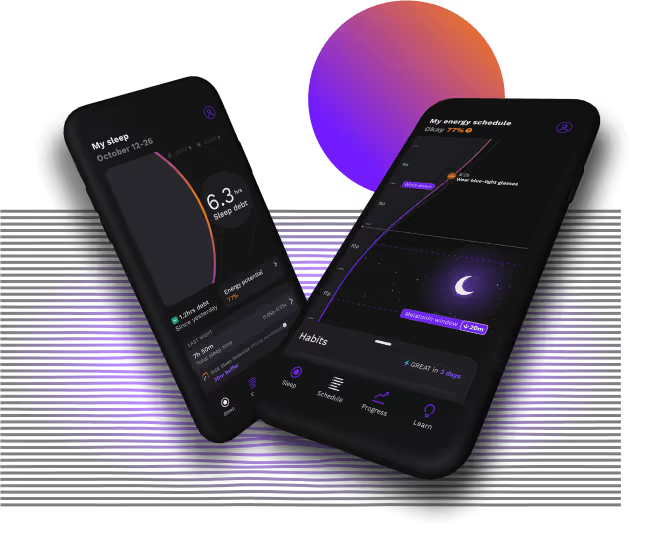
RISE makes it easy to improve your sleep and daily energy to reach your potential



It can be tricky to know if you’re getting enough sleep. Most of us don’t know how much sleep we need, we grow used to the signs of sleep deprivation, and the symptoms can look similar to symptoms of other health issues.
Symptoms of a lack of sleep include:
In the long run, not getting enough sleep can lead to an increased risk of hypertension (high blood pressure), obesity, diabetes, and cardiovascular disease.
For a solid answer, use RISE to find out how much sleep you need and whether you have any sleep debt.
Heads-up: You might feel these symptoms if you have poor sleep quality, even if you’re getting enough sleep quantity. As we’ve said, you’ll need both good quality sleep and enough quantity sleep to feel your absolute best.
Sleep quality is how well you slept. In contrast to the more simple task of defining sleep quantity, defining sleep quality is much more complicated than it seems. The simple definition — that’s sometimes used in clinical trials and everyday life — is how well you think you slept.
But sleep quality can also be defined more expansively to include all of the following:
Indeed, there’s no agreed-upon definition for sleep quality, so when you see the metric on a sleep tracker or in a sleep study, it could be reflecting very different things.
Just as there’s no set definition, there’s also no set method of measuring the quality of sleep.
Because sleep quality is multidimensional it is challenging to capture the entirety of sleep quality with a single metric. Some aspects of sleep quality, such as sleep onset latency and sleep efficiency have standardized objective measurement approaches, while others, like sleep regularity, do not.
Before the proliferation of consumer wearable technology, sleep quality was mostly measured with self-assessment in some way. Nowadays, you can get a sleep quality score from an app, wearable, or device, but this is actually making things more complicated.
As there’s no standardization, trackers measure sleep quality in many different ways and it’s often not clear how exactly it’s being measured.
Here’s a closer look at the most common ways sleep quality can be measured.
Sleep studies often use questionnaires to try and determine your sleep quality.
For example, the Pittsburgh Sleep Quality Index (PSQI) is a self-rated questionnaire. It asks about factors like your sleep onset latency, use of sleep medication, sleep disturbances, and sleep duration over the course of one month. Each metric is scored and combined to give you one final score.
PSQI can be beneficial for healthcare providers to assess whether someone is a poor sleeper and it can be used in studies to screen out bad sleepers and derive findings, such as links between something and poor quality sleep. But it doesn’t provide much useful information beyond this.
It can tell you if you have poor quality sleep and try to rate your sleep on a scale (despite never really being validated as a graded marker of sleep issues), but it doesn’t tell you what’s causing poor sleep or how to improve your score.
In sleep medicine, doctors can measure sleep quality in a few different ways to help diagnose and treat patients with sleep problems. They may use polysomnography to assess a patient's sleep in a lab or surveys, like the PSQI.
But often, patients will be asked to keep a sleep journal, which might include similar questions to what you’d find on the PSQI.
Questions might ask about:
Many sleep trackers use their own scoring systems to give you a sleep quality score. This is often presented as a percentage or a score out of 100.
Different trackers use different metrics. This may include how long you sleep, how restless your sleep is, how long you spend in different sleep stages, and heart rate variability, which is the variation in time between heartbeats.
There isn’t any research proving that the sleep quality score given by a sleep tracker correlates with your own self-rated sleep quality or any outcomes of sleep you care about like health, productivity, or performance.
As there are so many metrics involved — and we don’t know how they combine into one singular score — it’s hard to know what to change in your daily life to improve these sleep quality scores. Moreover, because these scores haven’t been studied in relation to sleep outcomes, it’s unlikely that improving your score, even if you knew how, would make a significant difference to your energy levels, health, or productivity.
Similarly, it can be hard for a doctor to use this information to diagnose sleep disorders, like insomnia and sleep apnea, as there isn’t much transparency or standardization between trackers.
Sleep quality scores on sleep trackers focus on single nights of sleep, which doesn’t shed light on longer-term trends and can produce anxiety when you experience the occasional bad night’s sleep (which happens to all of us).
Just like with sleep quantity, you can estimate your sleep quality yourself. But self-assessments don’t always take into account all of the parameters of sleep you might look into with a polysomnography or PSQI survey.
Self-assessments of sleep can be affected by your health, mood, or whether you have a sleep disorder like insomnia, and they don’t always match objective measures of your sleep.
But research shows how you feel about your sleep — not what a tracker tells you — can make a difference to your well-being.
You can self-rate your sleep quality in the RISE app.
You won’t rate your sleep quality as soon as you wake up, though. When you first wake up, you’ll probably experience sleep inertia, or grogginess, which can cloud how you really feel about your sleep.
RISE waits 90 minutes before asking you to self-rate your sleep quality to get a more accurate rating. Rating sleep quality later in the day is also what sleep doctors recommend to their insomnia patients.
It can be hard to know if your sleep quality is good. Sleep studies, surveys, and trackers all have their own scoring systems to assess your sleep quality. These systems measure different aspects of sleep quality with varying degrees of accuracy and may not match your own perception of your sleep. Moreover, there’s no optimal level for sleep quality — despite what your sleep tracker might tell you.
While certain dimensions of sleep quality, like sleep onset latency and sleep efficiency, have generally agreed-upon scoring methods (it’s normal to take 10-30 minutes to fall asleep, and 85% and up is typically the threshold for healthy sleep efficiency), other aspects of sleep quality are unique to you (such as sleep timing) or subjective (such as how you feel about your sleep).
Indeed, the type of sleep that leads one person to think they had good quality sleep may be different for another person. For example, one study found people with insomnia had more stringent requirements to judge their sleep as good quality. And different perceptions of sleep may influence how you feel and function during the day differently.
What feels like good quality sleep may not actually be good sleep — or even enough sleep. For instance, we tend to feel energized on less sleep, for example. Dr. Jamie Zeitzer — co-director of the Center for Sleep and Circadian Sciences at Stanford University and one of our sleep advisors, explains it this way: “The kind of sleep that may lead to improved subjective sleep quality (i.e., how I slept last night) may not be the same kind of sleep that is necessary for improved sleep quality for memory consolidation or immune restoration (among many others).”
That’s why, in general, you’ll want to consider all aspects of sleep that contribute to sleep quality to get all of the benefits of good sleep:
Or more simply, focus on keeping your sleep debt low and staying in sync with your circadian rhythm, with the help of the RISE app, to get the restorative sleep you need to feel and perform your best.
You can improve your sleep quality and get the right quantity of sleep for you by improving your sleep hygiene. These are the daily sleep habits that are proven to help you get more restful sleep to keep your sleep debt low, stay in sync with your circadian rhythm, and feel and function your best each day.
Here’s what to do:
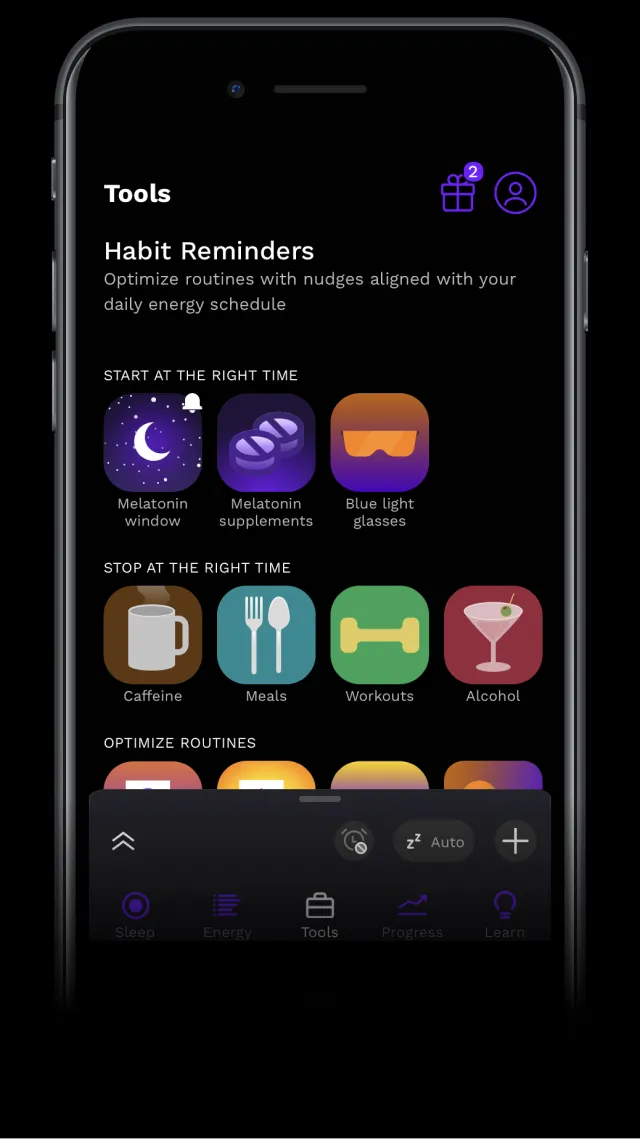
RISE can tell you the best time to do 20+ sleep hygiene habits at the right time for you each day. Doing them at the right time makes these habits even more effective at improving your sleep.
RISE can work out how much sleep you need and if you have any sleep debt (so you know the sleep quantity to aim for), and predict the timing of your circadian rhythm each day, to help you sleep at the right time for you on a regular schedule.
Quality vs. quantity is debated in many aspects of life, but it’s not a debate that applies to sleep.
In fact, sleep quality and sleep quantity are just as important as each other. You need the right quantity of sleep for you and you need this sleep to be good quality to feel and perform your best.
The RISE app can help you with both sleep quality and quantity.
Users notice the difference:
“This is such a helpful app. RISE is really good for understanding how to improve your sleep! It’s working too! I have a lot more energy during the day from following the app’s guidance.” Read the review.
And 80% of RISE users get better sleep within five days — so you don’t need to worry about quality vs. quantity for long.
Neither wins. You need both enough sleep for you and sleep that is well timed, fairly continuous, and restful. You cannot hack a short night by chasing a higher quality score, and long hours at the wrong clock time still leave you misaligned. The cleaner pair to manage is sleep debt and circadian alignment. Pay down debt so quantity is covered, and sleep on a regular schedule so quality has a chance.
Sleep quality is how well you slept, but there is no single agreed definition. Clinicians and studies may include how fast you fell asleep, how much of the night you stayed asleep, timing, regularity, stages, whether the sleep was natural, and how rested you feel the next day. A tracker score is one private mix of those slices. How you feel about the night can matter more than that number.
Quantity is last night’s hours, after you subtract time awake in bed. Sleep debt is how much sleep you still owe versus your personal need, usually across recent nights. One long night does not erase a short week. Debt is the running total that predicts how you feel. RISE measures it over 14 nights. That is why debt is the more useful quantity metric over time.
It can estimate slices — duration, motion, heart rate, sometimes stages — and then mash them into a score. There is no research showing those consumer scores match how you rate the night or the outcomes you care about. Chasing a 100 can tip into orthosomnia, an unhealthy focus on perfecting the data. Use a tracker for hours and timing. Do not treat the score as a diagnosis.
Keep sleep debt low and sleep at a regular time for your body. Get morning light, dim the evening, and move caffeine, alcohol, heavy meals, and hard workouts earlier. Aim to fall asleep in about 10 to 30 minutes and keep most of the night unbroken. A cool, dark, quiet room helps. RISE can show your need, your 14-night debt, and when to do those habits for your clock.